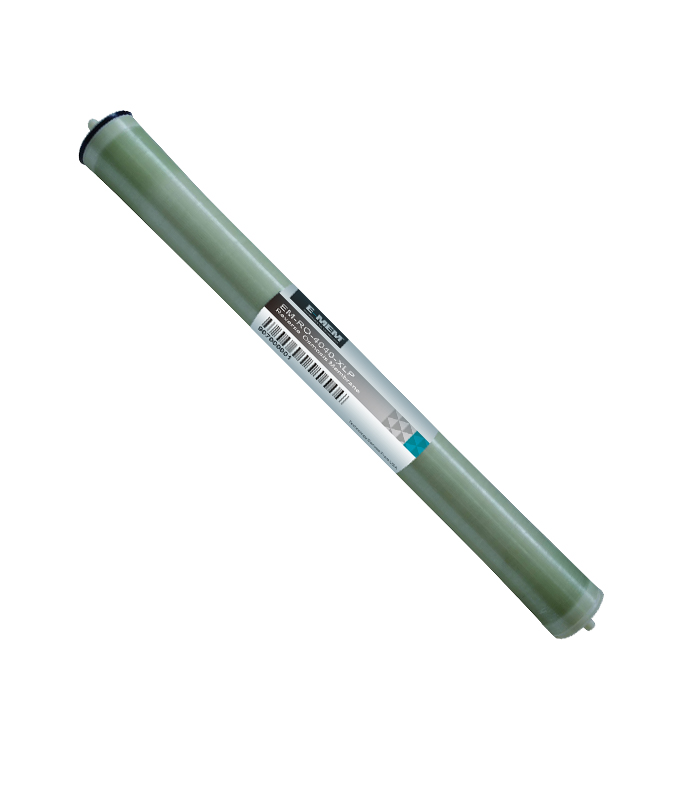
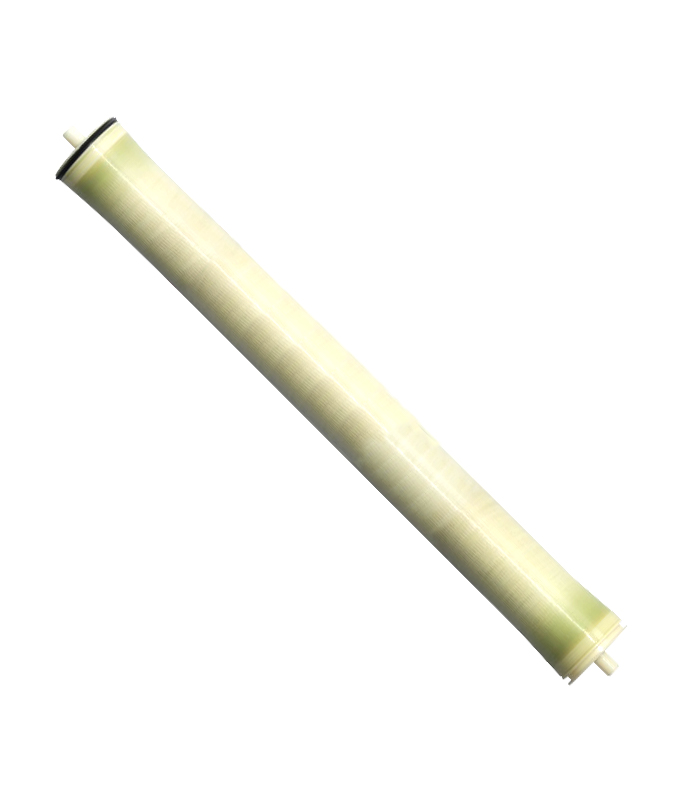
Description E-MEM 4040 Industrial RO Membrane – High-Flux 4″×40″ Element The E-MEM 4040 Industrial RO Membrane is a premium-grade aromatic polyamide composite element designed for large-scale water purification systems. It offers high water flux at lower operating pressures, making it both efficient and cost-effective.Typically used in industrial and commercial RO plants, this membrane supports applications such as boiler-feed water, bottled water production, surface and groundwater desalination, and more. Key Features High Salt Rejection: Delivers rejection rates up to 99.5% under test conditions (2000 ppm NaCl) for model BW-4040/4040 series. Extra Low Pressure Operation: Reduced feed pressure requirements compared to standard membranes—leading to lower pump energy and infrastructure cost. Large Active Area: Approximately 8.4 m² (≈90.4 ft²) membrane area in the 4040 size, supporting high production volumes. Wide Application Range: Suitable for surface water, municipal feed, groundwater, brackish water (salt content <8000 ppm), and industrial water purification. Robust Operating Conditions: Max operating pressure ≈4.14 MPa (600 psi), max feed water temperature up to 45 °C, feed free chlorine concentration <0.1 ppm. Technical Specifications Model: 4040 size (4″ diameter × 40″ length) Active Membrane Area: approx. 90.4 ft² (8.4 m²) Typical Permeate Flow: ~2400 GPD (≈9.1 m³/day) under 2000 ppm NaCl test condition for BW-4040. Max Operating Pressure: 4.14 MPa (600 psi) Max Feed Temperature: 45 °C Maximum Feed SDI (Silt Density Index): ≤ 5 Free Chlorine Concentration: <0.1 ppm recommended pH Range (Continuous Use): 3-10; (Cleaning): 2-12 Why Choose the E-MEM 4040 Industrial RO Membrane? If you manage a commercial or industrial water-treatment system, the E-MEM 4040 offers a standout balance of performance, efficiency, and cost-effectiveness. Because it operates at lower pressures while maintaining high flux and salt rejection, you incur lower pump energy and infrastructure costs. Moreover, its compatibility with a wide range of feed-water types—from municipal to low-salinity brackish—makes it flexible for many system designs. In addition, the large active area ensures robust production capacity, and you’ll benefit from reduced downtime and consistent water quality. Installation & Maintenance Tips Pre-treatment is key: Ensure feed water SDI ≤ 5 and free-chlorine <0.1 ppm. Start-up Flush: When new, flush the membrane at lower pressure for 15-25 minutes, then at full design pressure for 60-90 minutes—discharge the initial permeate/concentrate. Monitor differential pressure and permeate conductance: Increases in either may indicate fouling or scaling. Cleaning schedule: Clean based on manufacturer guidelines; use approved chemicals and check pH limits (2-12 for chemical cleaning). Storage of spare elements: Keep wet, or soak in 1.0% sodium bisulfite solution if prolonged storage is required.
Related products
 $ 84.26 Select options This product has multiple variants. The options may be chosen on the product page
 Select options This product has multiple variants. The options may be chosen on the product page
 $ 7.66 Select options This product has multiple variants. The options may be chosen on the product page